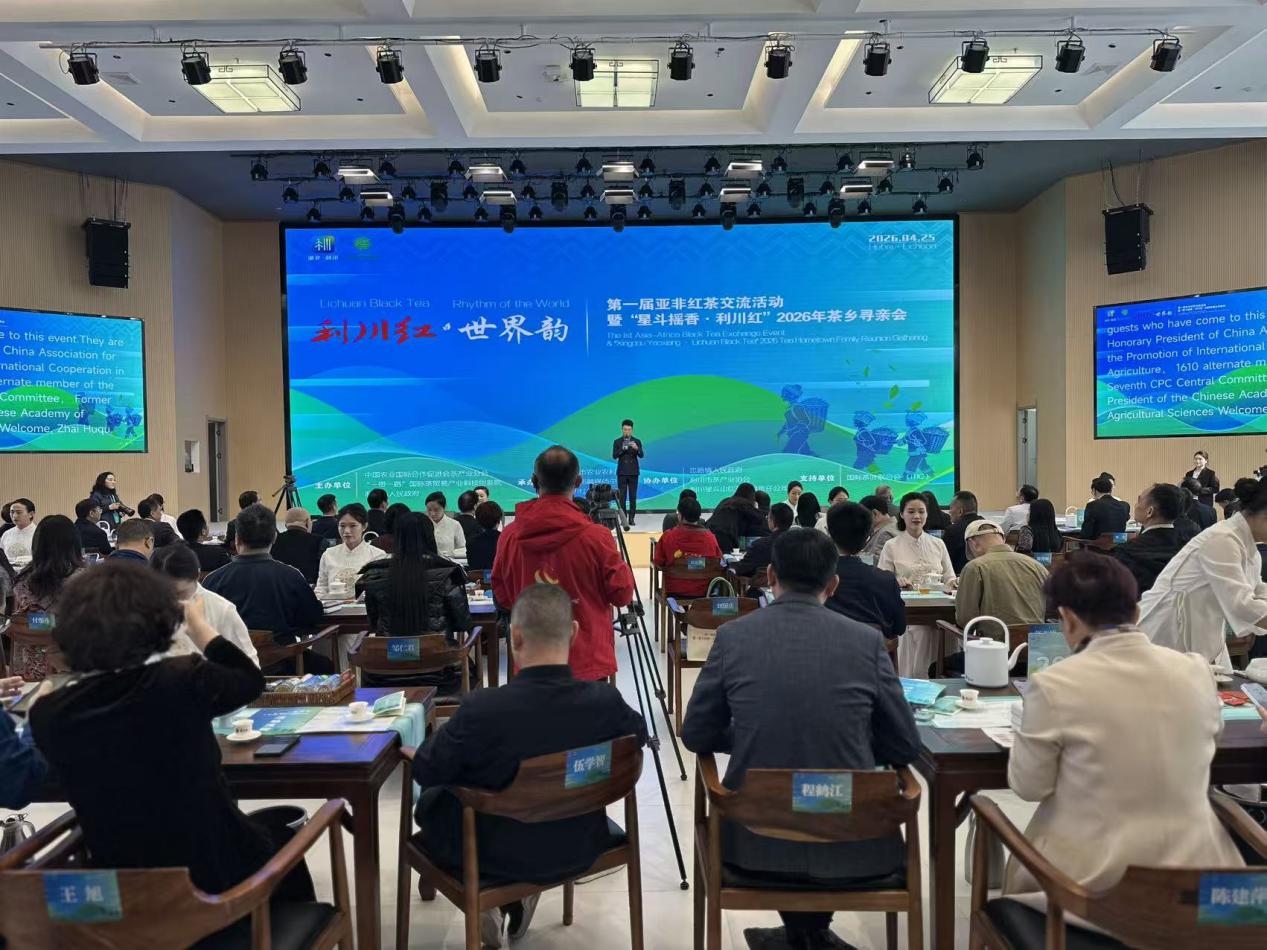
The First Asia–Africa Black Tea Exchange Event kicked off in Lichuan, Hubei Province, on April 25, bringing together government officials, tea industry experts, scholars, business leaders, and entrepreneurs from China, Nepal, Sri Lanka, South Korea, and other countries. Participants discussed the development of the black tea industry and explored new opportunities for mutual learning among cultures.
Zhai Huqu, Honorary President of the China Association for the Promotion of International Agricultural Cooperation (CAPIAC) and former President of the Chinese Academy of Agricultural Sciences; Yang Shengliao, Vice Governor of Enshi Prefecture; Parbati Aryal, Economic Minister of the Embassy of Nepal in China; and Lai Yuming, Deputy Secretary of the CPC Lichuan Committee and Mayor of Lichuan, delivered remarks at the opening ceremony.
Zhai Huqu stated that, in the face of shared challenges such as climate change, sustainable development, and weakening global consumption, CAPIAC is willing to actively serve as a bridge by building practical and efficient platforms for cooperation. Guided by the principle of extensive consultation, joint contribution, and shared benefits, CAPIAC will actively promote the establishment of policy dialogue mechanisms, mutual recognition of standards, and technical collaboration, while fostering mutual understanding among peoples through cultural and people-to-people exchanges.
Yang Shengliao noted that tea plantations in Enshi now cover more than 1.8 million mu (120,000 hectares), with a total output value exceeding RMB 25 billion. He said Enshi is vigorously promoting premium teas nationwide while boosting bulk tea exports, with Enshi selenium-rich tea now exported to more than 30 countries and regions. He spoke highly of the significance of the Asia–Africa Black Tea Exchange Event and expressed hope that the event would propel innovation, deepen cooperation, and promote mutual learning.
Lai Yuming stated that Lichuan lies within the golden tea-growing belt at 30° north latitude and enjoys outstanding ecological conditions as well as a long history of tea cultivation. In recent years, Lichuan has thoroughly pursued a development philosophy featuring integration of tea culture, tea industry, and tea technology. Lichuan obtained China's first Demeter certification, has showcased its teas at the G20 Summit and UN events, and has achieved a brand value of RMB 3.9 billion. Ranked seventh among China's black tea brands, Lichuan Black Tea has become a distinguished name, now enjoyed in ten countries across Asia, Africa, and Europe.
The Global Initiative for the Sustainable Development of Black Tea (Lichuan, China) was officially launched during the event. The initiative calls on the global tea industry to safeguard ecology and address climate change; pursue collaborative innovation and advance mutual recognition of standards; deepen cooperation and expand global markets; ensure fair competition and uphold industry value; promote shared benefits and build collaborative industrial chains; and fulfill responsibilities and deliver comprehensive value.
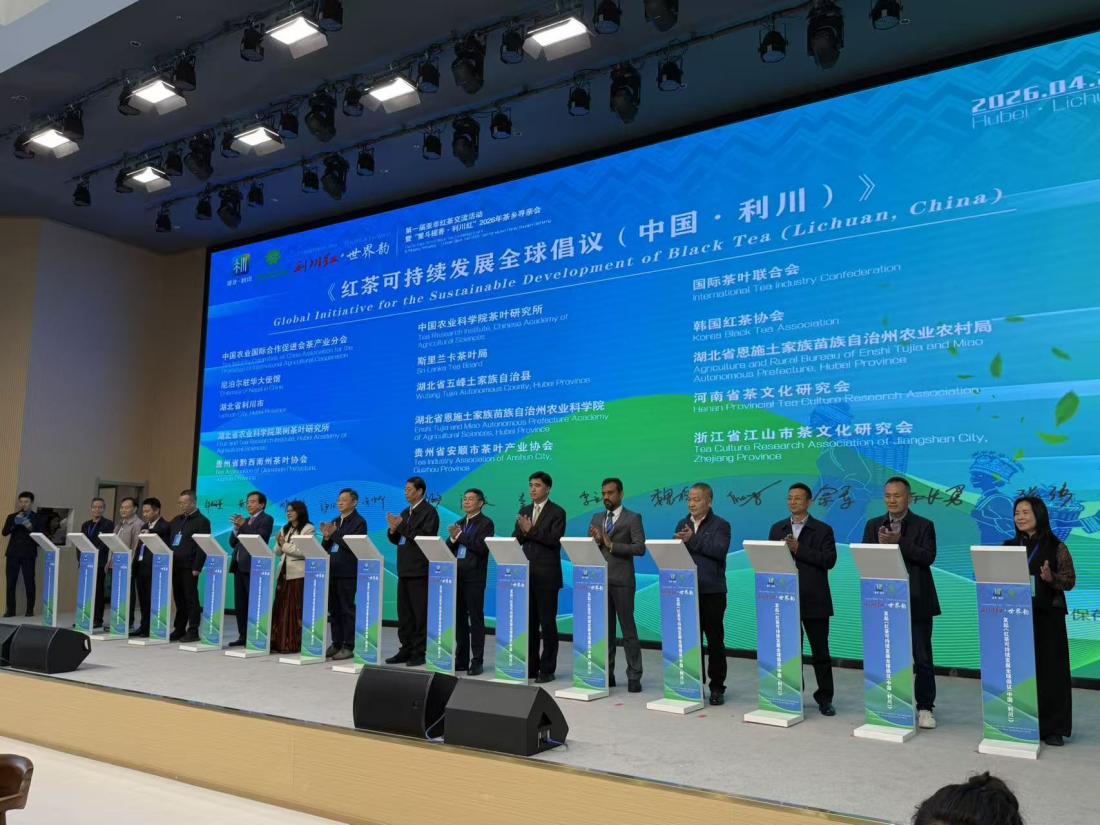
Launch Ceremony of the Global Initiative for the Sustainable Development of Black Tea (Lichuan, China)
Li Wanying, Vice Chair of the Tea Industry Committee of CAPIAC, released the China Black Tea Import and Export Analysis Report (2026), providing an overview of the current status and trends of China's black tea trade. Wang Fei, Professor at the School of Journalism and Communication of Renmin University of China, released the Research Report on the Brand Equity of Lichuan Black Tea (2026), offering an assessment of the brand's competitiveness and future development direction.
Wei You, Executive Vice President of CAPIAC, moderated the Asia–Africa Black Tea Roundtable Dialogue. Tea industry representatives from China and abroad exchanged views on hot topics including emerging consumption trends in the European black tea market, tea brand marketing strategies in the AI era, black tea consumption and new tea beverage trends in South Korea, demand trends in China's premium black tea market, and the internationalization of Lichuan Black Tea. The discussion generated valuable insights, making a contribution to the integrated development of the Asia–Africa black tea industry.
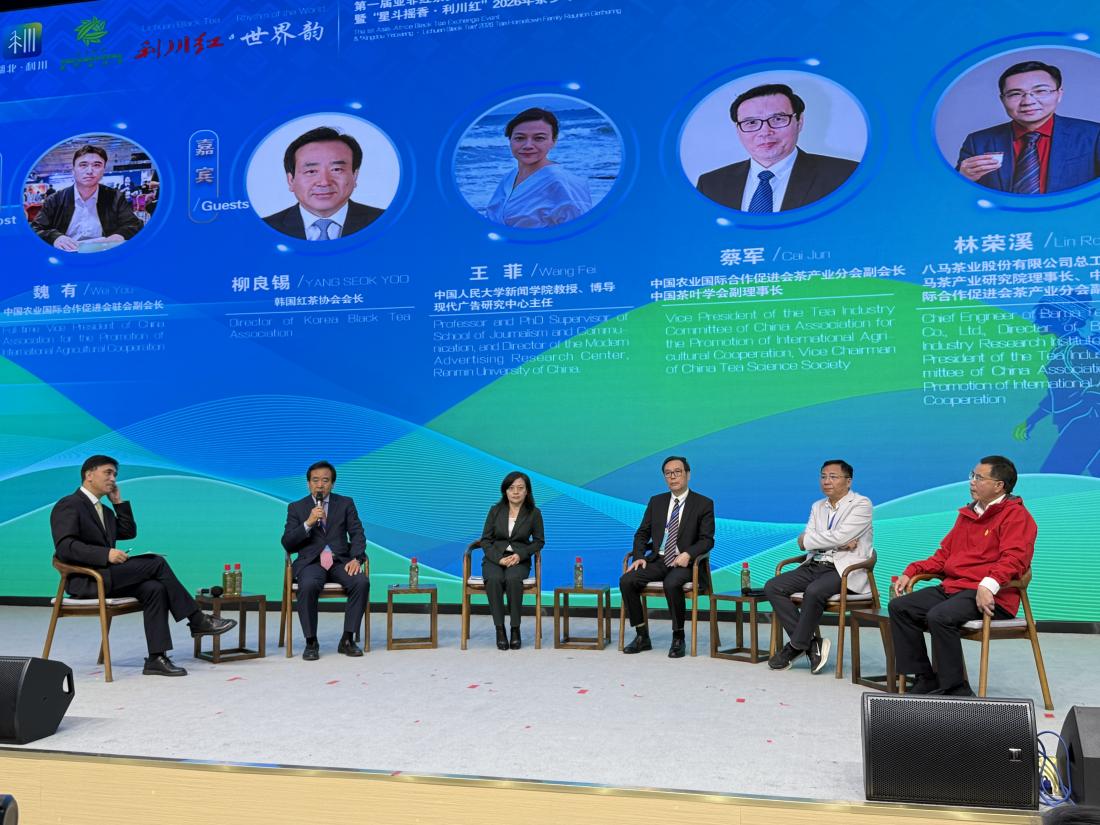
Asia–Africa Black Tea Roundtable Dialogue
The event was co-hosted by the Tea Industry Committee of CAPIAC, the Belt and Road Innovation Institute for International Tea Trade and Science and Technology, and the Lichuan People's Government, with support from the International Tea Industry Confederation.
(Photos provided by the Tea Industry Committee of CAPIAC)
 No.11 Nongzhanguan Nanli,Chaoyang District,Beijing China (100125)
