The Chinese Academy of Agricultural Sciences (CAAS) recently held an international symposium on dryland agriculture and food security via video conference. Mei Xurong, Vice President of CAAS, Ismahane Elouafi, Chief Scientist of the Food and Agriculture Organization of the United Nations (FAO), and representatives from the International Crops Research Institute for the Semi-Arid Tropics (ICRISAT), the International Center for Agricultural Research in the Dry Areas (ICARDA), and the International Center for Biosaline Agriculture (ICBA), attended the opening ceremony and delivered remarks. Mei Xurong delivered a keynote report on “Research and Innovation in Dryland Agriculture in China: Towards a 2030 Sustainable Development Agenda.”
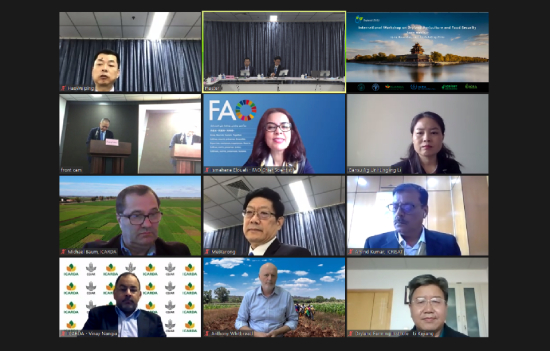
Mei Xurong pointed out that dryland agriculture plays an irreplaceable role in safeguarding global food security and nutrition since one-third of the world’s population depends on dryland agriculture. However, dryland agriculture faces challenges such as resource shortages, ecosystem degradation and climate change. To cope with these challenges, achieve sustainable development of dryland agriculture, and build a resilient dryland ecosystem, the key is to transform agricultural development via S&T innovation, and push forward global cooperation and integrated development. CAAS has proposed that efforts should be made to strengthen partnerships in the field of dryland agriculture, jointly build an international cooperation platform for dryland agriculture research, and find ways to realize sustainable development of dryland agriculture.
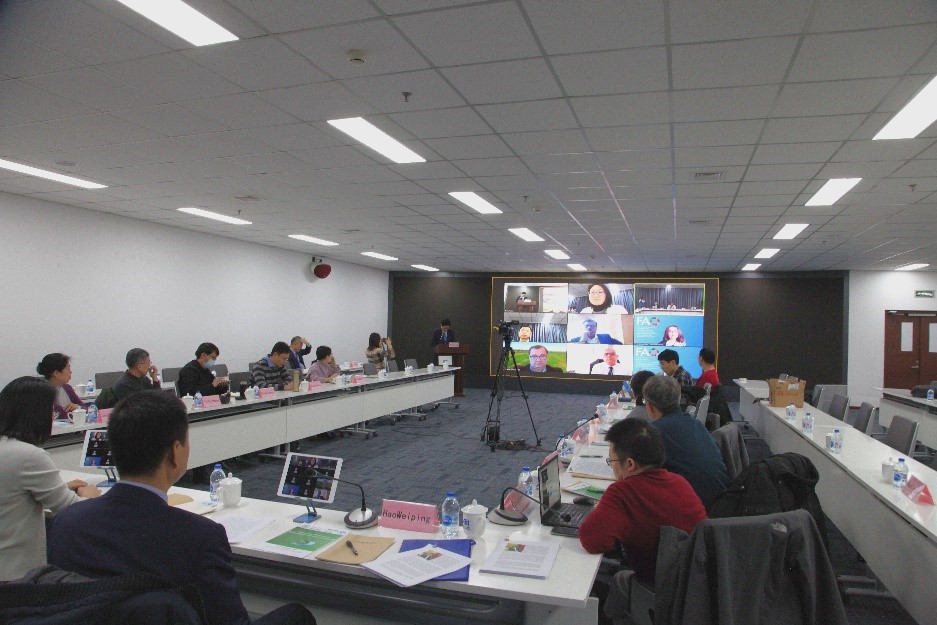
The symposium featured academic talks and discussions on various topics such as the sustainable development of dryland agriculture, biodiversity and ecosystem restoration, the breeding of drought-tolerant crops, and climate-smart dryland agriculture. About 80 representatives from domestic and foreign research institutes including FAO, the International Atomic Energy Agency, ICRISAT, ICARDA, ICBA, and the University of Agriculture, Peshawar, Pakistan, attended the symposium. (Correspondent: Zhang Shuang)
 No.11 Nongzhanguan Nanli,Chaoyang District,Beijing China (100125)
